Clinical protocol
Guided bone regeneration (GBR)
How to rebuild horizontal and vertical bone volume with membranes, biomaterials and PRF — decision criteria, step-by-step execution and practice on real patients in Brazil.
No bone, no prosthetic position
Post-extraction resorption is greatest buccolingually and, without regeneration, forces the implant outside the prosthetic envelope. GBR relies on cell exclusion: a membrane maintains the space and prevents soft-tissue ingrowth, while the graft supports the clot and scaffolds new bone. Success depends on four factors — clot stability, membrane stability, tension-free closure and adequate healing time.
Clinically reviewed in August 2026
Resorbable vs non-resorbable membrane
Membrane choice follows the defect type. Contained defects tolerate collagen; non-contained defects and vertical gains require rigid space maintenance.
Resorbable collagen
- Indicated for contained defects, dehiscences and fenestrations with supporting walls.
- No second removal surgery and better tolerance of early exposure.
- Low rigidity: needs graft support or tenting screws/pins.
d-PTFE / titanium-reinforced
- Indicated for non-contained defects and vertical regeneration, where space maintenance is critical.
- Screw or tack fixation to eliminate membrane micromovement.
- Exposure is the main complication: demands strict passive closure and planned removal.
The protocol in 6 phases
Sequence performed by participants on real patients, under direct faculty supervision.
- 01
Defect diagnosis on CBCT
Defect classification (horizontal, vertical or combined), remaining wall count and reverse prosthetic planning to define the volume actually needed.
- 02
Flap and recipient bed preparation
Full-thickness flap with wide access, defect debridement and cortical perforations to open marrow channels and bring cells and blood supply to the graft.
- 03
Graft: mixture and layering
Particulate autogenous bone against the cortex for osteogenesis and slow-resorbing xenograft as the outer layer for long-term volume, hydrated with liquid PRF (sticky bone).
- 04
Membrane and fixation
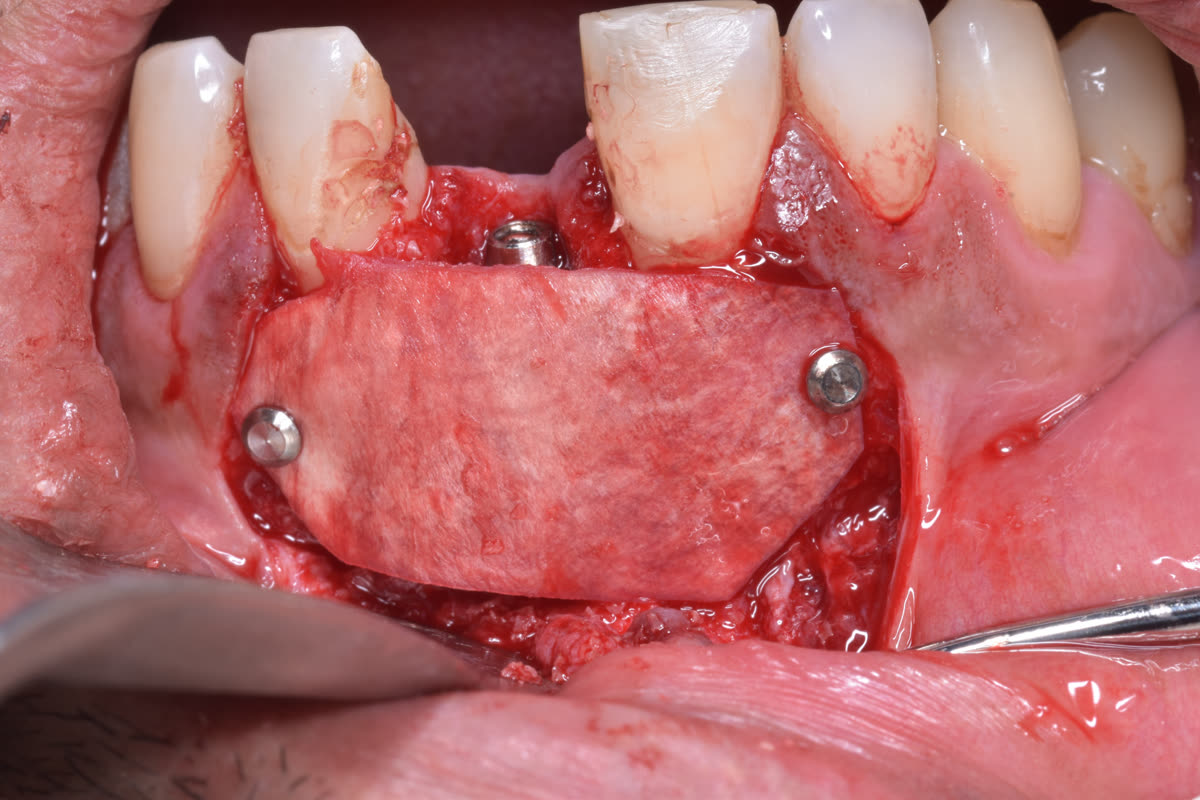
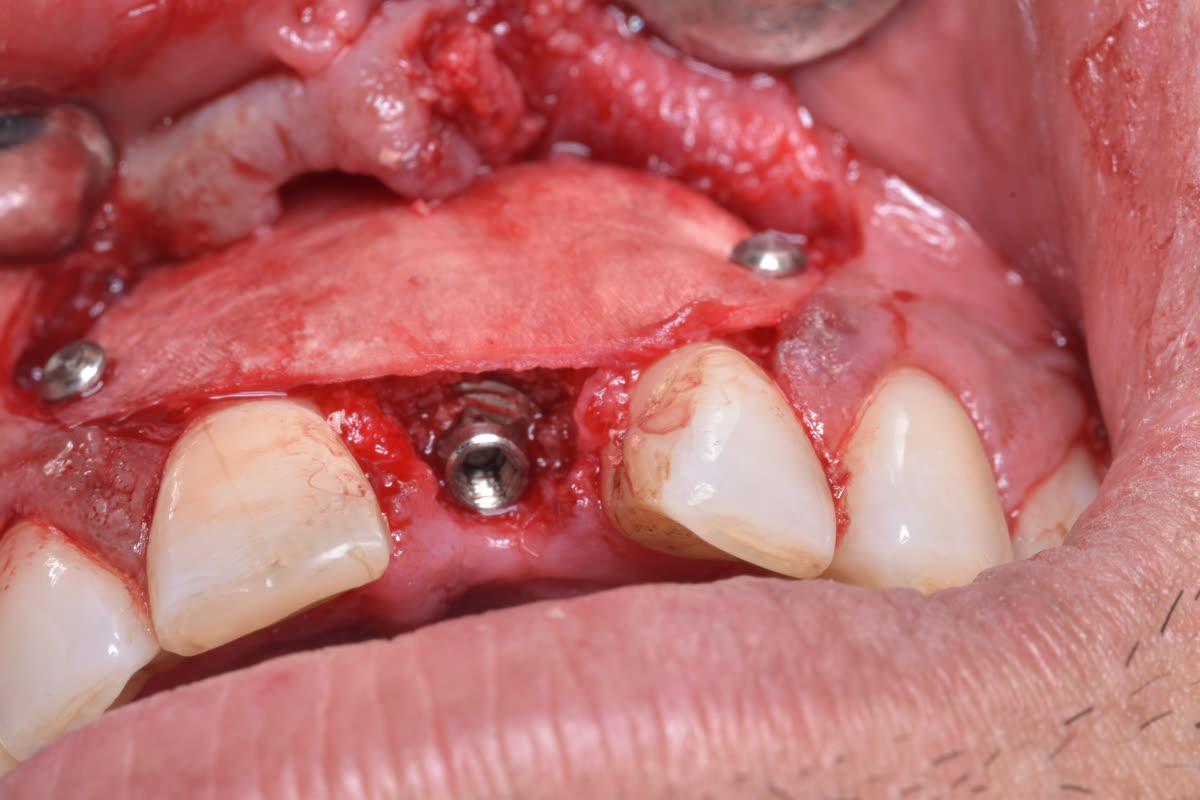
Membrane adapted with a 2–3 mm overlap beyond the defect and fixed with tacks or screws. PRF membranes on top speed up soft-tissue healing.
- 05
Passive closure
Periosteal releasing incision and two-layer suturing (horizontal mattress + simple interrupted). Flap tension is the leading cause of exposure and graft loss.
- 06
Healing and re-entry
Four to six months of maturation depending on the defect, radiographic control and re-entry for implant placement or non-resorbable membrane removal.
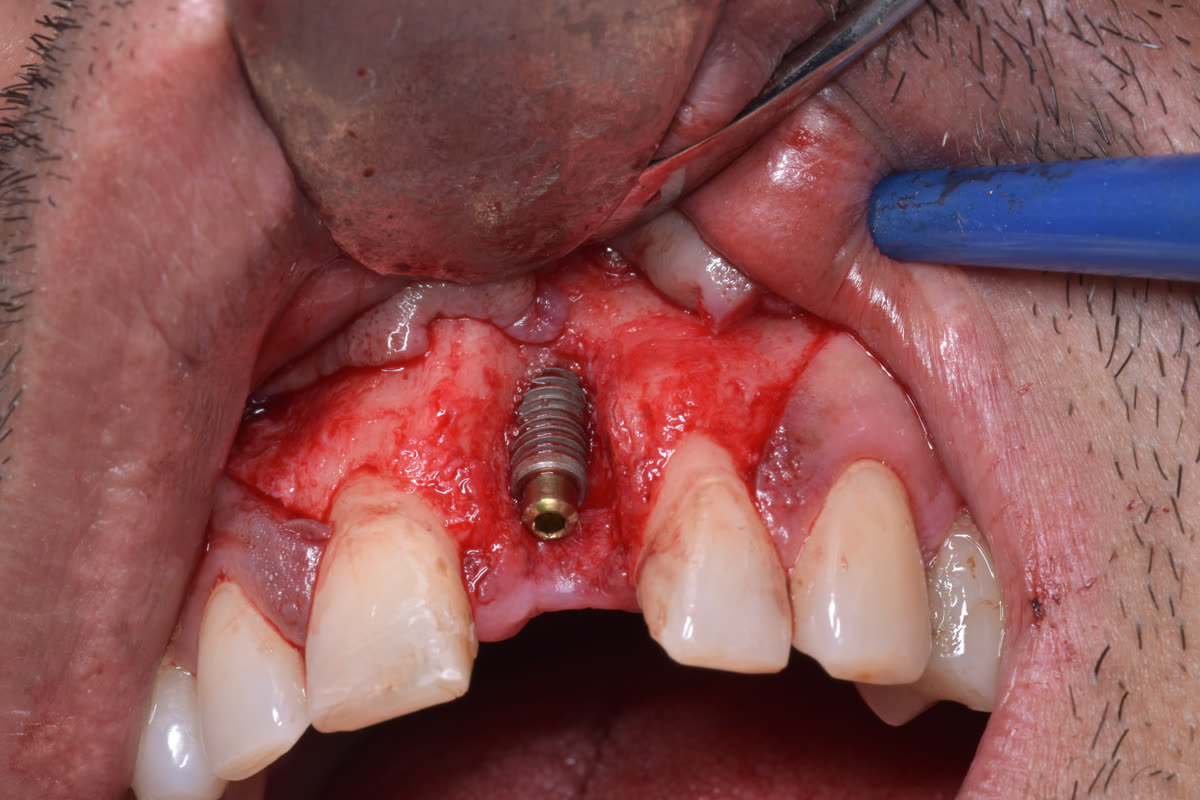
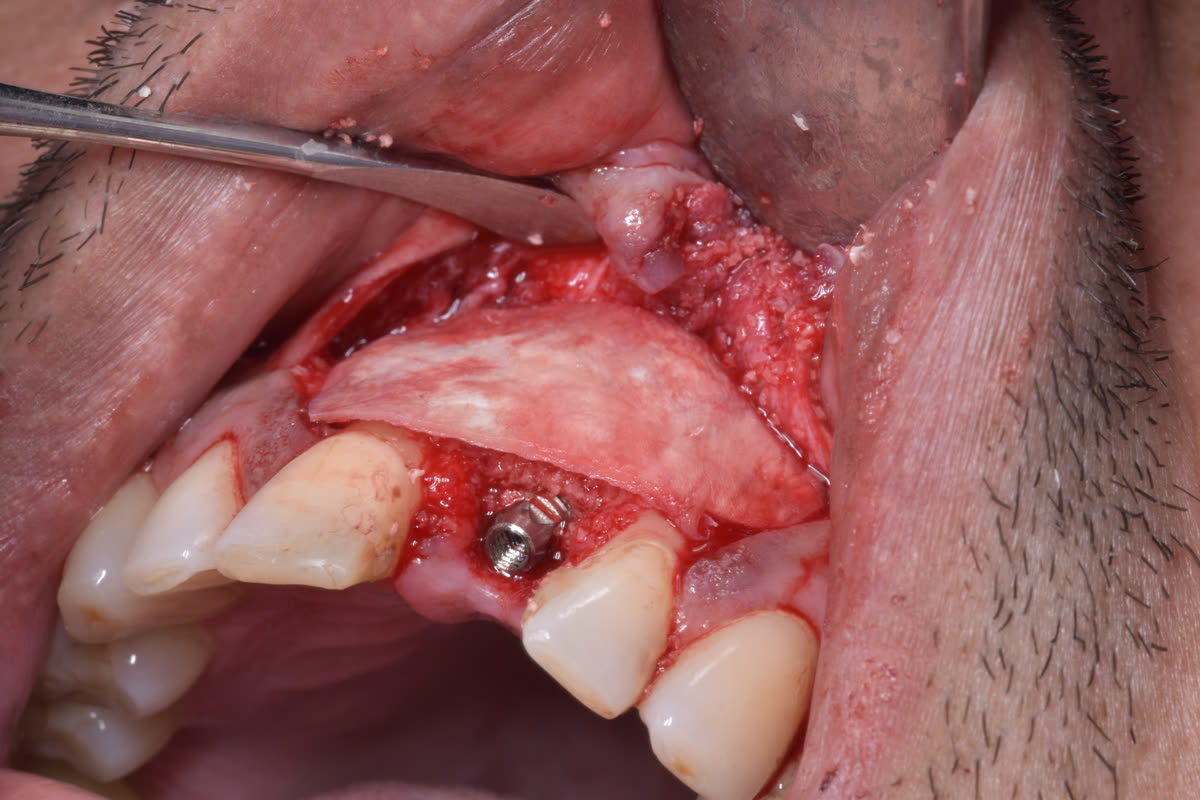
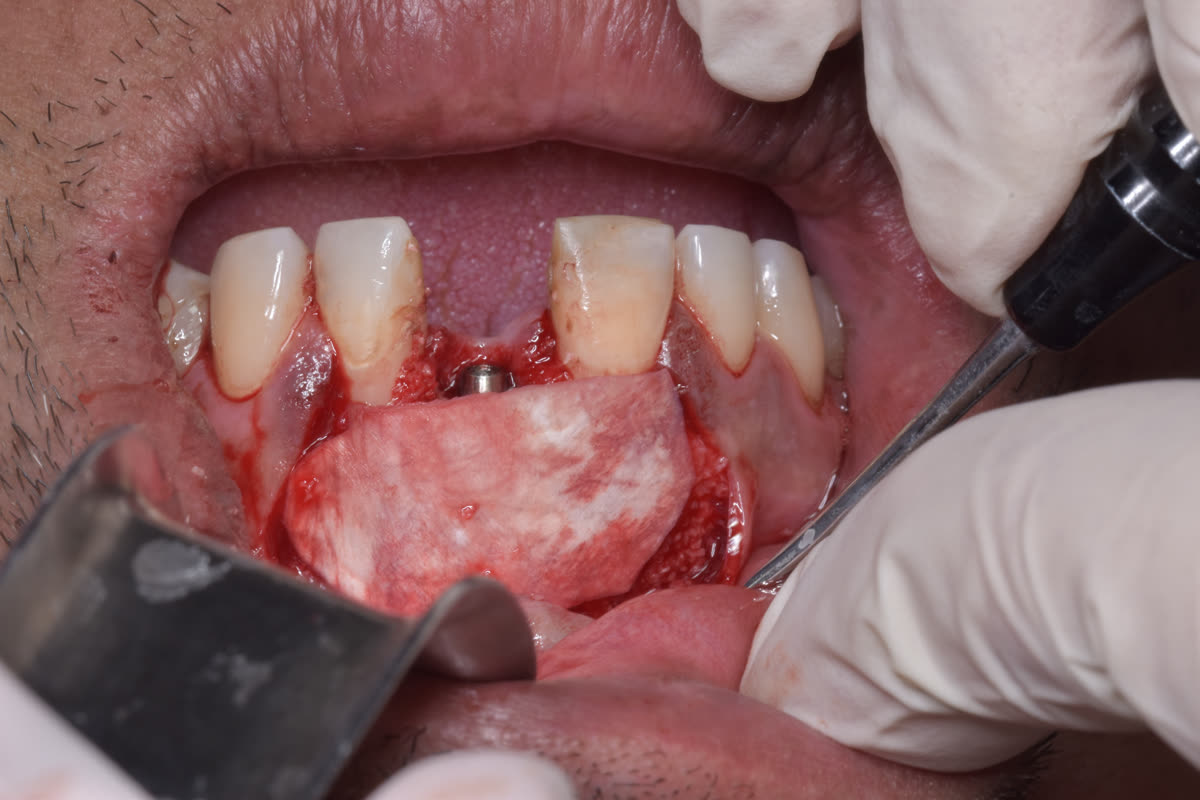
Cases and images from the residency
Clinical records from past editions: planning, grafting and radiographic control.
Frequently asked questions
Are horizontal and vertical regeneration equally predictable?
No. Horizontal gain is far more predictable. Vertical regeneration requires rigid space maintenance, membrane fixation and flawless closure — an advanced learning-curve indication.
What if the membrane becomes exposed?
With collagen membranes and a small exposure, monitoring plus chlorhexidine hygiene is enough. With d-PTFE, plan an early removal at the first signs of infection to save as much graft as possible.
Can the implant be placed simultaneously with GBR?
Yes, whenever primary stability is achievable and the implant sits in a correct prosthetic position with a contained dehiscence. In extensive or vertical defects, a staged approach is safer.
What is the role of PRF in GBR?
PRF does not replace the graft: it improves biomaterial handling (sticky bone), accelerates soft-tissue healing and reduces post-operative morbidity.
Who signs this protocol
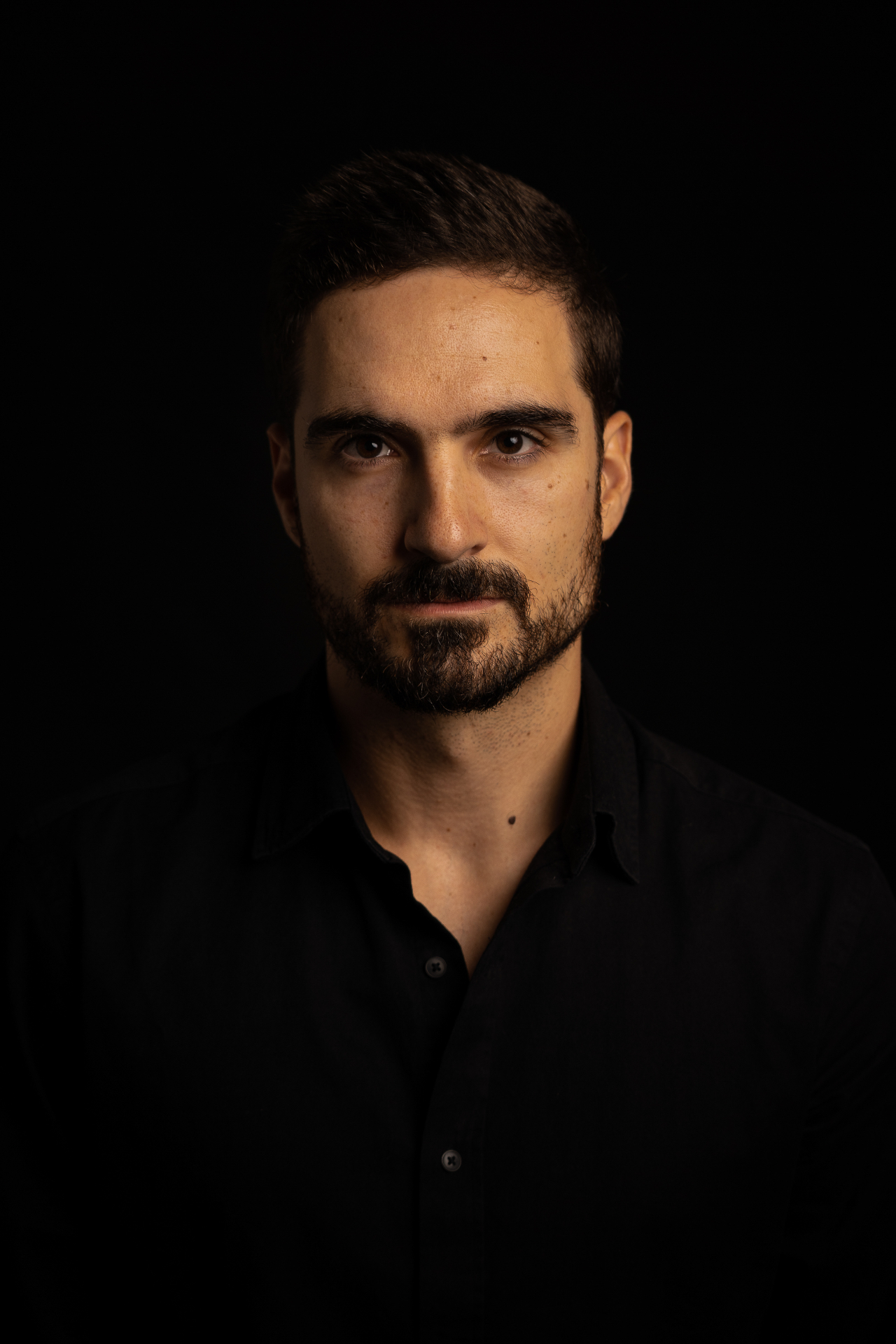
Dr. João Borges Nogueira
Oral surgeon practising in Paris, dedicated to advanced implantology, regeneration and international training of dentists.
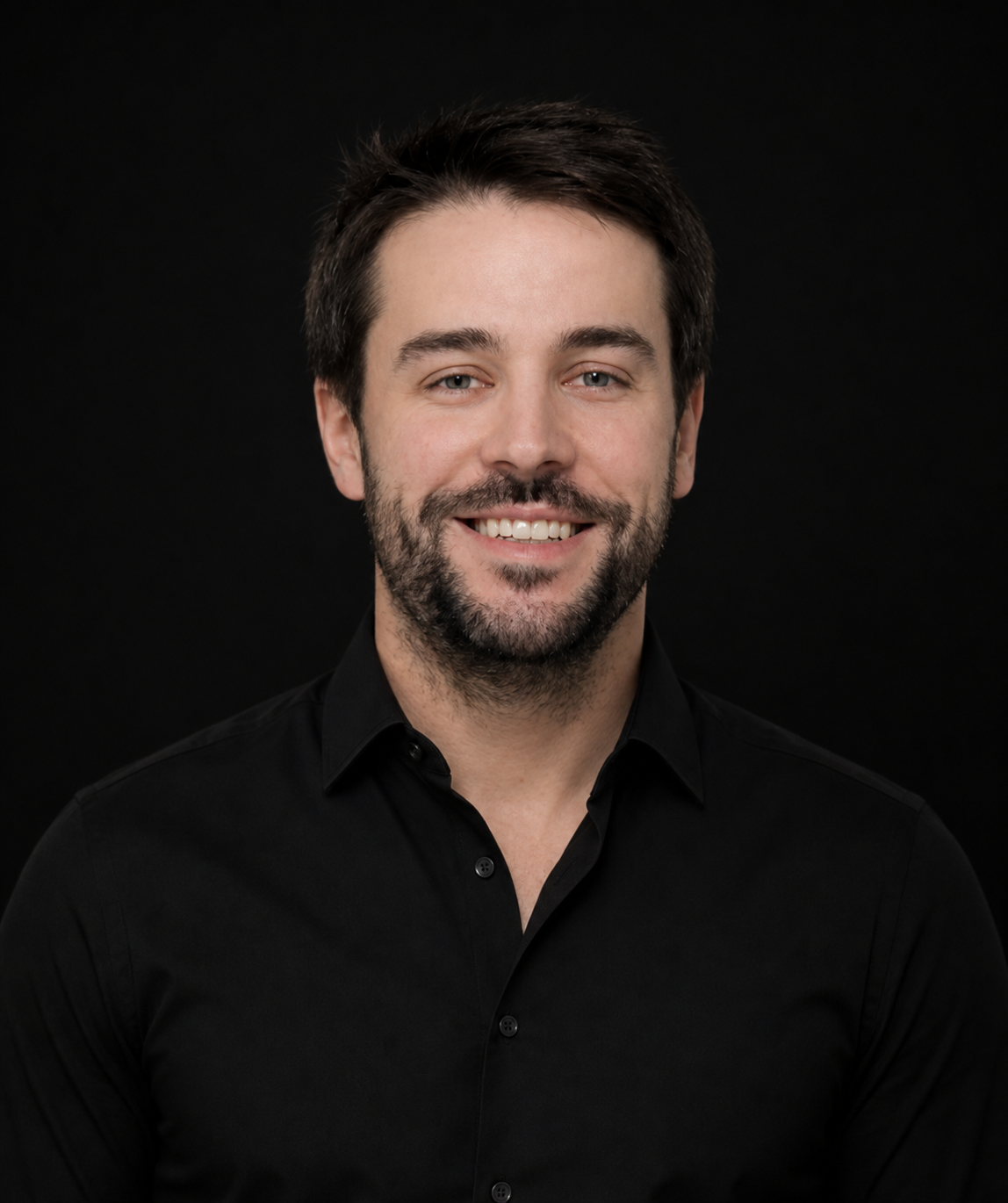
Dr. Gonçalo Castilho
Specialist in oral implantology practising in Portugal, focused on full-arch rehabilitations, digital planning and complex reconstruction cases.
Related procedures
These techniques combine within the same treatment plan — explore each protocol in detail.
All-on-4 — full-arch rehabilitation
Full-arch protocol on four implants with immediate loading.
Sinus lift
Lateral and transcrestal approaches to regain posterior bone height.
Immediate post-extraction implants
Placement in the same surgical session, managing the gap and emergence profile.
PRF — platelet-rich fibrin
Autologous membranes and sticky bone to improve healing and integration.
Want to perform your first GBR under supervision?
In the intensive Brazil residency, each participant operates GBR, sinus lift, All-on-4 and PRF cases on real patients, with continuous clinical mentoring.